Dried Screw Washers
Rubber washers under each screw head crack after years of heat and cold. Water follows the shank into the building, so a roof with thousands of screws can drip in dozens of spots at once.

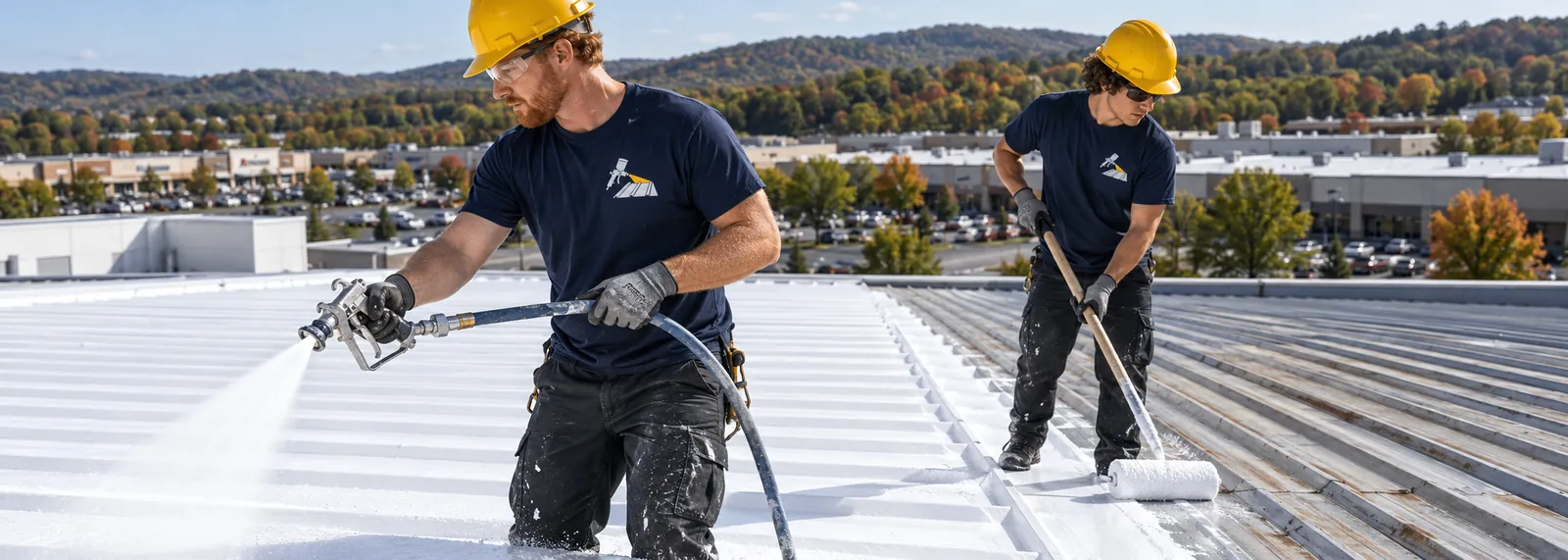
We coat commercial metal roofs on Florence warehouses, shops, and flex buildings. Each job starts with a roof inspection, then screw, lap, and rust repairs before any coating goes on.
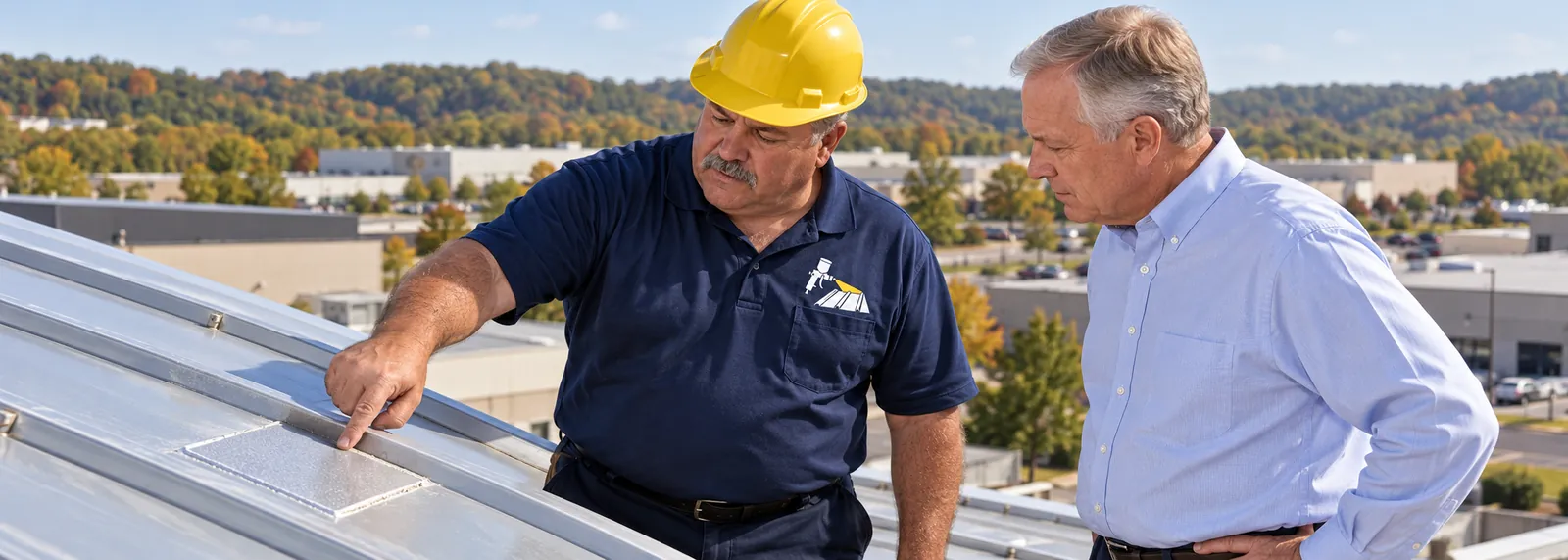
Most leaks on a steel roof start at a small detail long before the panels fail. These six conditions show up on warehouse, shop, and church roofs around Florence.
Rubber washers under each screw head crack after years of heat and cold. Water follows the shank into the building, so a roof with thousands of screws can drip in dozens of spots at once.
Where one sheet overlaps the next across the slope, water sits in the joint and rusts both sheets from the edge in. End laps usually fail before the open field of the panel does.
Factory paint on older panels turns to powder and leaves bare spots on the ribs. Chalk has to come off with a pressure wash, because coating applied over it peels away in sheets.
Leaves and grit packed into gutters hold water against the eave line, where panels rust first. Ice that builds there in winter pries at trim and sealant.
Translucent panels go brittle and yellow, and the laps around them open up. Each one gets a decision before coating: reseal it, replace it, or cover it with steel.
Rooftop units, exhaust fans, and pipe boots each break the roof surface. Flashing around these curbs shrinks and splits, and stains on the ceiling tile below often trace back here.
Pick the roof that looks most like yours. Each system below lists the roofs it fits and the conditions we check before it goes on.
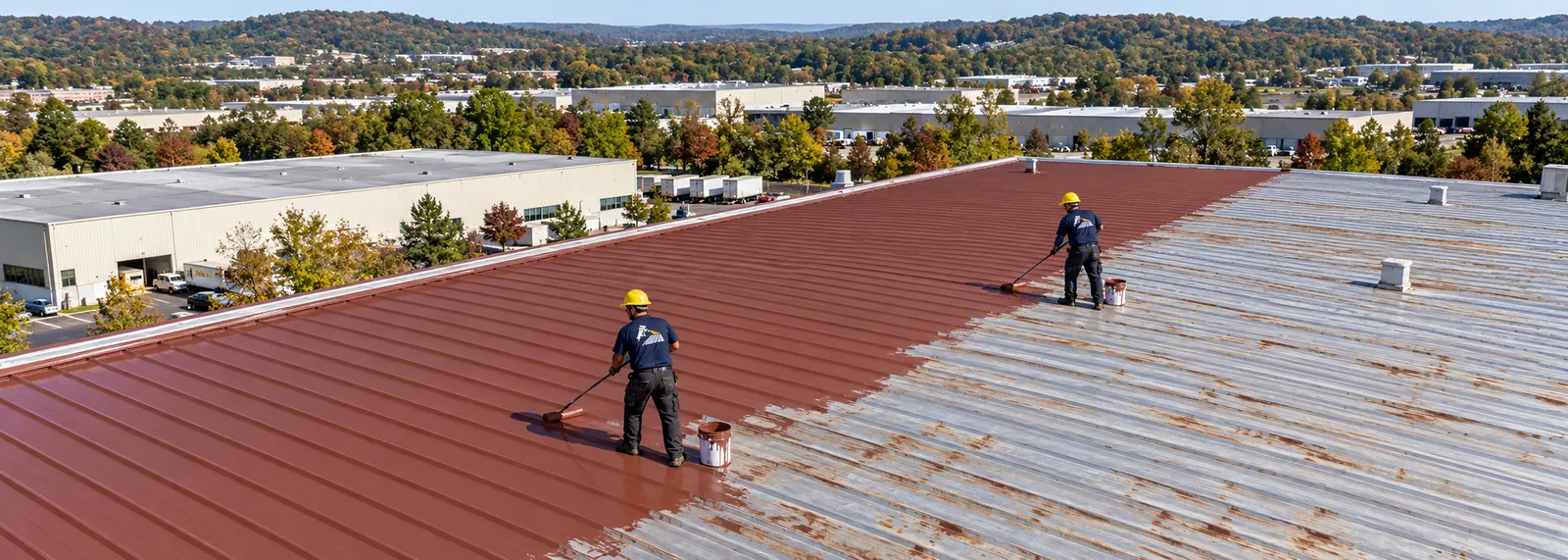
Restoration for R-panel, PBR, and corrugated roofs: every screw checked, laps reinforced, rust primed, then a full coat over panels and fasteners.

Silicone holds up where water lingers after rain: low-slope metal, flat decks around rooftop units, and gutters that stay wet for hours.
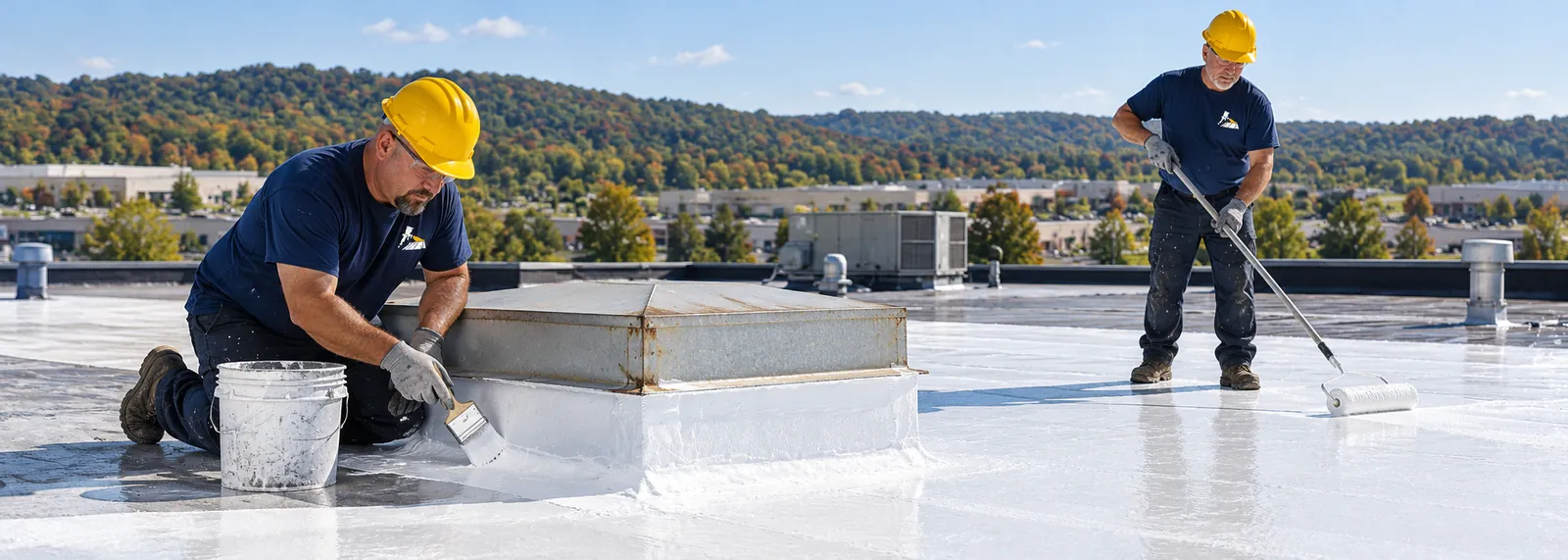
Acrylic fits pitched panel roofs that shed water fast. It costs less per coat than silicone and takes a fresh acrylic coat easily in later years.
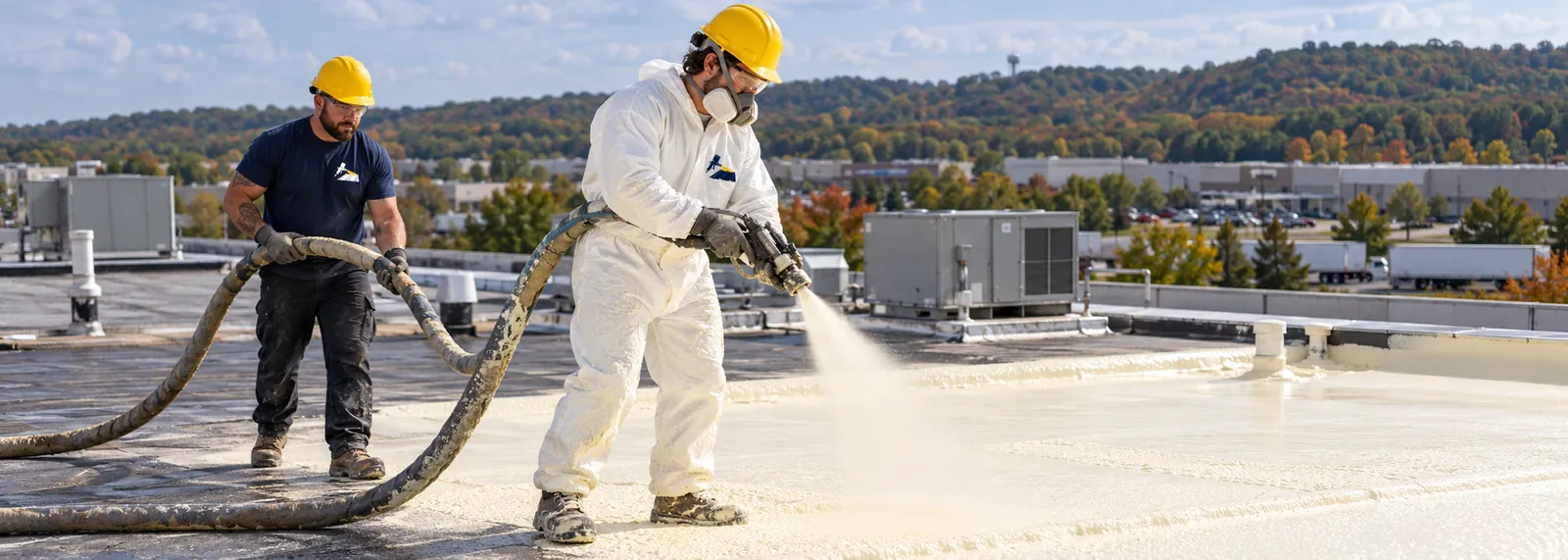
Foam fills panel flutes, adds insulation, and can be built up to move water toward drains, then a coating topcoat protects it from sun.
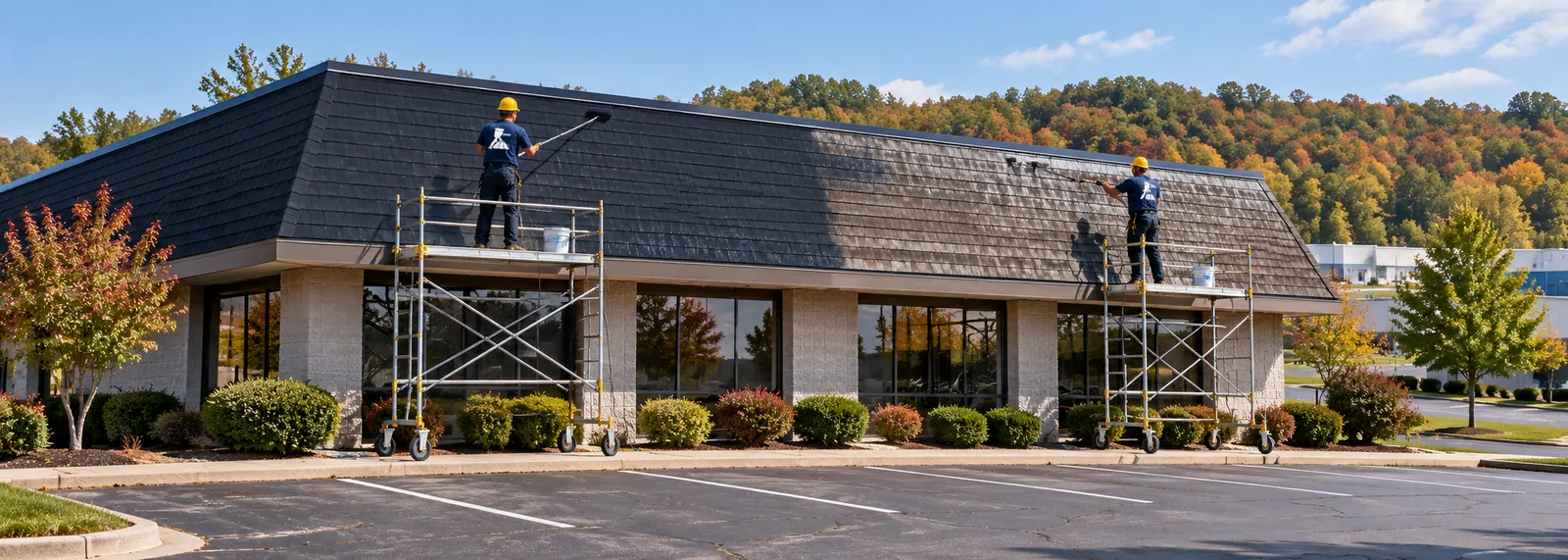
A coating made for shingles can extend a commercial shingle roof whose shingles still lie flat and hold their granules, when the maker allows it.
Where your roof sits on each line points to the job it needs. The dots mark where each job usually starts; the inspection makes the final call.
Coating only fits surface rust, restoration handles rust at laps and edges, and holes through the panels point to re-paneling or replacement.
Screws that still bite take a dab of sealant, loose ones get larger screws during restoration, and widespread spinning screws signal structural work.
Closed laps go straight to coating, open laps get fabric or tape first, and laps rusted through call for new sheets.
Dry insulation keeps every option open, while wet or crushed insulation moves the roof toward replacement.
Panels lying flat between purlins can be coated; sagging panels need structural repair or replacement.
Positions show common patterns. The screw test and moisture readings on your roof decide the job.
Call and tell us where the drip shows up and when it started. A leak near a skylight row or unit curb points us to the right part of the roof.
These are the changes owners notice after a metal roof is restored and coated. Results start with the roof we find, which is why the inspection comes first.
Replacing the roof means removing panels, hauling scrap, and buying new steel and insulation.
Coating keeps the panels, purlins, and dry insulation in place, so the money goes into screws, laps, and coating.
A tear-off opens the roof over stock, desks, and machinery for days at a time.
Work happens on top of the existing panels, and docks and offices keep running below.
Faded panels soak up sun and pass heat into the space under the deck.
A white coating reflects much of that sunlight, and cooler panels move less at screws and laps.
Bare steel keeps rusting until the panels need replacing.
A coated roof can take a fresh compatible coat later, after cleaning, in place of a new roof.
Every metal roof we coat in Florence goes through these five steps in the same order, from the first walk to the last coat.
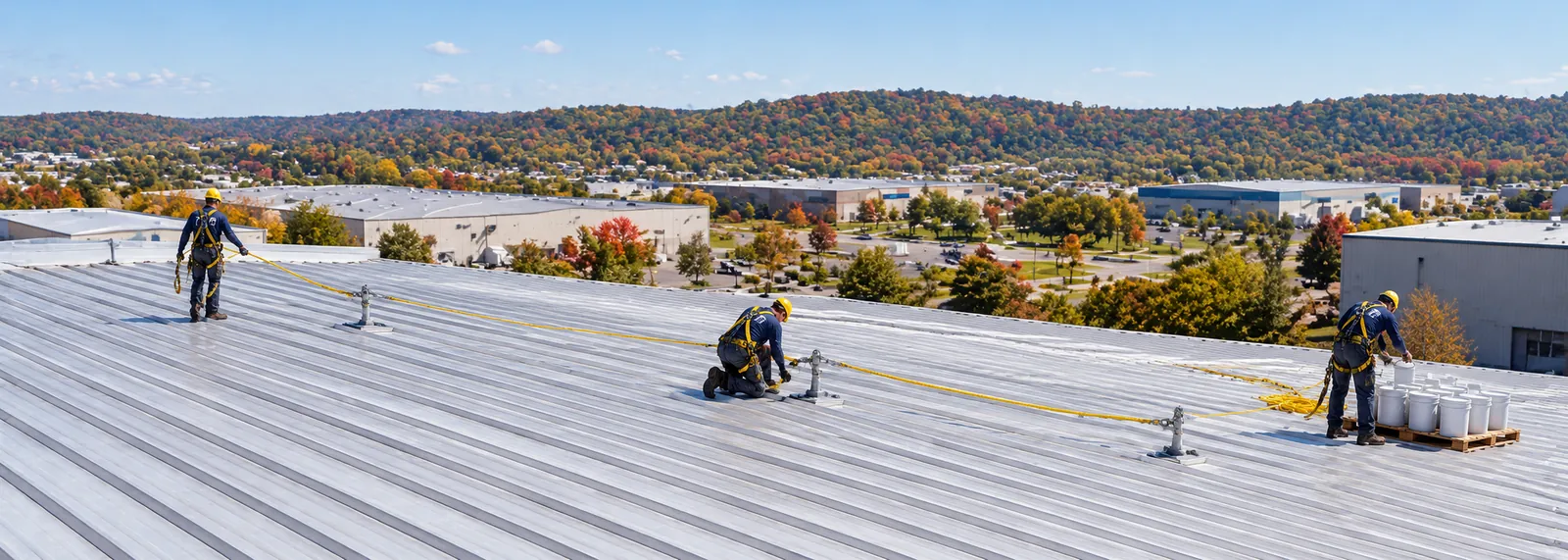
We walk the panels, test screws, open a few laps, and check the insulation for moisture. Photos and notes from this walk decide whether the roof gets coating, restoration, or a different answer.
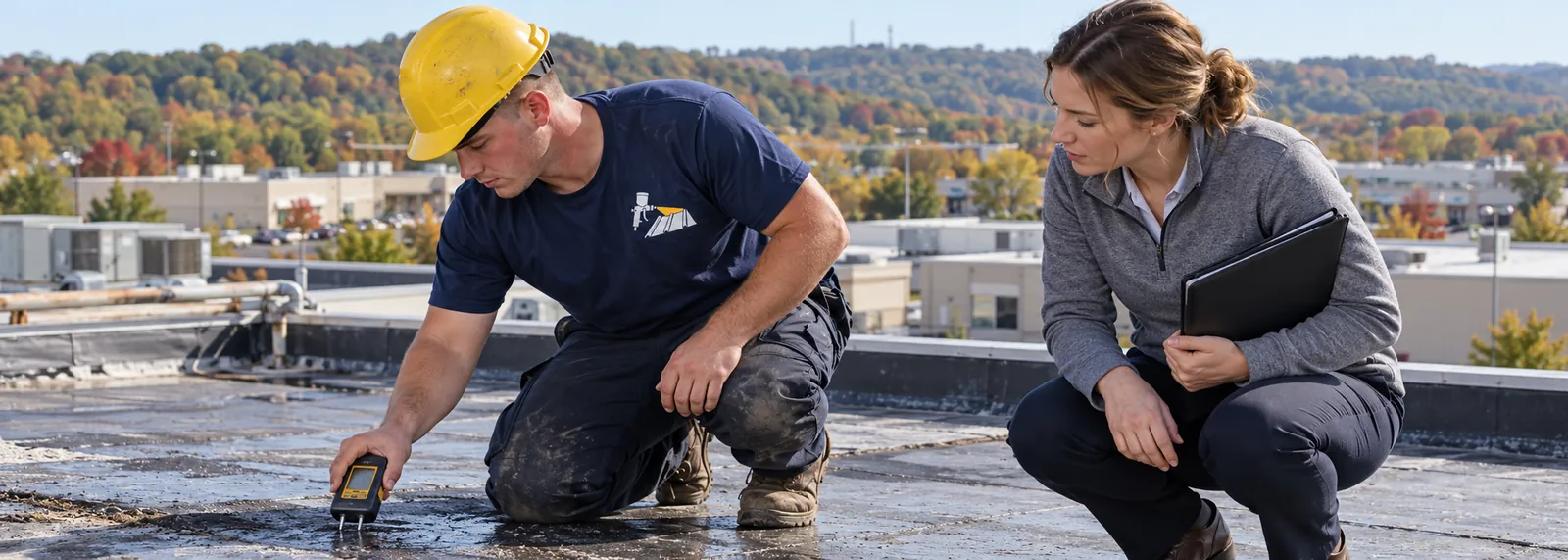
A pressure wash takes off dirt, chalk, and loose paint. Flaking rust gets wire-brushed or ground down to tight rust or bare steel, and old tar patches come off.
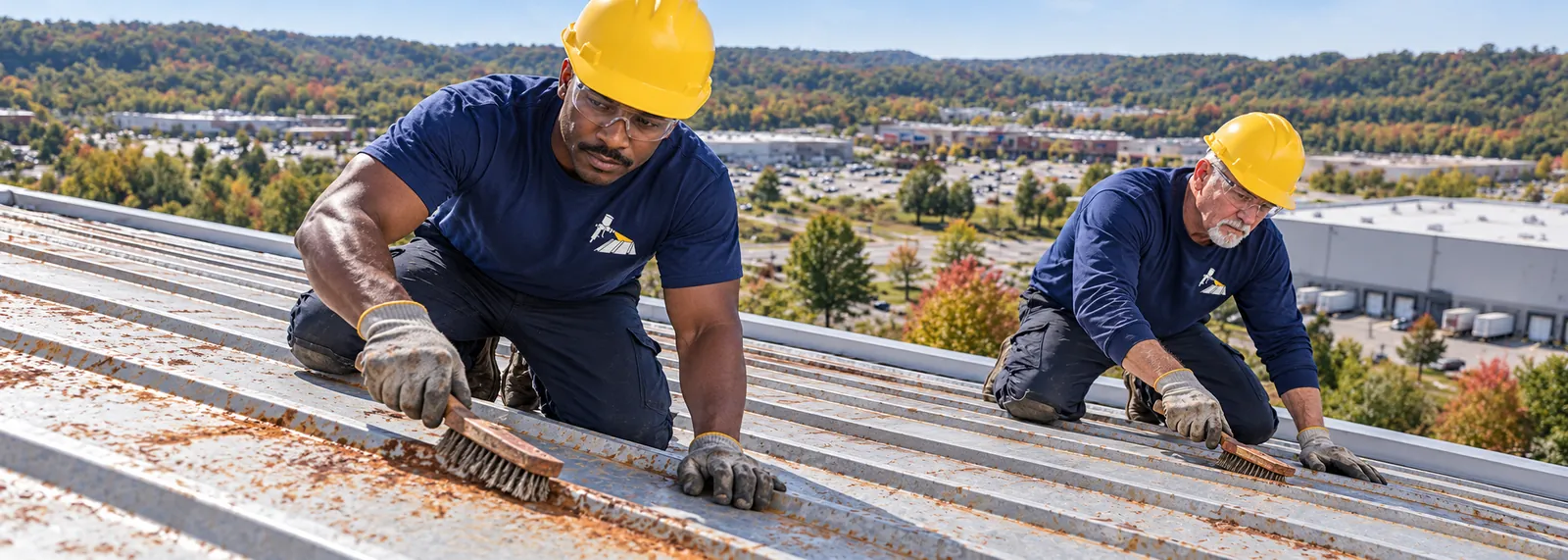
Loose and stripped screws are replaced with larger screws and new washers. Laps, end laps, and the ridge cap get fabric, tape, or mastic before any field coat.
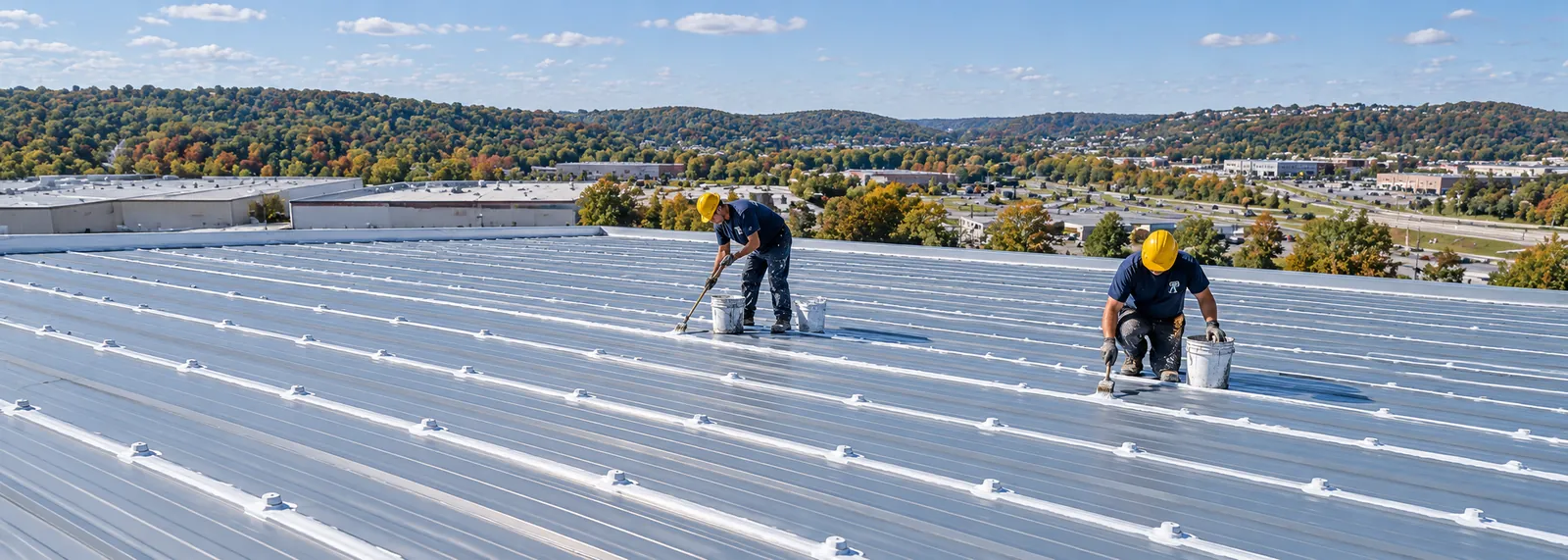
Rust spots get a rust-inhibiting primer, then the base and top coats go on by spray or roller to the thickness the product sheet calls for.
Every curb, skylight, and gutter gets a last look on a walk-through with you, plus photos of screws, laps, and details for your building file.
Is your building in Florence or one of the four towns in this table? We coat commercial roofs in all five. For a property somewhere else, call us or send us a message.
| Town | County | What We See On Roofs There |
|---|---|---|
| FlorenceMain Service City | Boone | Warehouses, flex buildings, and retail centers with exposed-fastener roofs, plus tenant changes that bring a county permit and a city fire inspection. |
| Union | Boone | Pole barns, equipment sheds, and shops with open purlins, where condensation rusts the panels from below. |
| Burlington | Boone | Older shop buildings with matching roof and wall panels, rust along the eave line, and gutters pulling loose. |
| Hebron | Boone | Very large logistics and air cargo roofs near CVG, coated in sections around docks and sorting floors. |
| Warsaw | Gallatin | Shops, churches, and warehouses where river fog and heavy dew keep panels wet into the morning. |
Straight answers to what Florence building owners ask before they book a roof inspection.
It puts one continuous, flexible film over the panels, screw heads, and seams, so water loses the gaps it used to get through. Leaks on most warehouse roofs begin at screws, laps, and flashing, and those get sealed along with the open field.
The film also keeps air and moisture off the steel, which slows rust, and a light color helps the roof run cooler.
Coating day comes after the slow work is done. By then the roof has been inspected, washed, re-screwed, primed at rust spots, and sealed at laps and curbs, and a big roof can hold thousands of screws.
The field coat goes on last, by spray or roller, to a set thickness, and it needs dry weather to cure before rain reaches it.
In most cases, yes, because the panels, insulation, and framing stay in place and nothing is torn off or hauled away. Your building also keeps working during the job.
That changes when panels are rusted through, the insulation is wet, or the roof sags between purlins. On those roofs a coating only delays replacement, so we check for all three first.
An empty building is the easiest time to do it, since crews can work over screw lines and skylights with nobody's stock below.
The City of Florence notes that a change of occupant or use brings a Boone County building permit and a city fire inspection. Fixing curb, gutter, and end-lap leaks first keeps stained ceiling tile out of that walkthrough, and roof work can share one schedule with the build-out.
Yes. Colored factory paint takes a coating well once it is washed, the chalk is gone, and bare spots are primed. Most owners switch to white for a cooler roof, and roofs seen from the street can stay closer to their old look with tan or gray.
We coat small shop roofs and large warehouse roofs alike. Size changes the schedule and the number of work zones, while the steps stay the same: inspect, wash, fix screws and laps, prime, and coat. Very large roofs are split into sections so docks and offices stay usable.
Answer seven quick questions for a ballpark range, or call to set up a roof inspection in Florence or a nearby town.
Leave a name and number and we will call you back about your commercial roof.
Or call (859) 204-8080 now